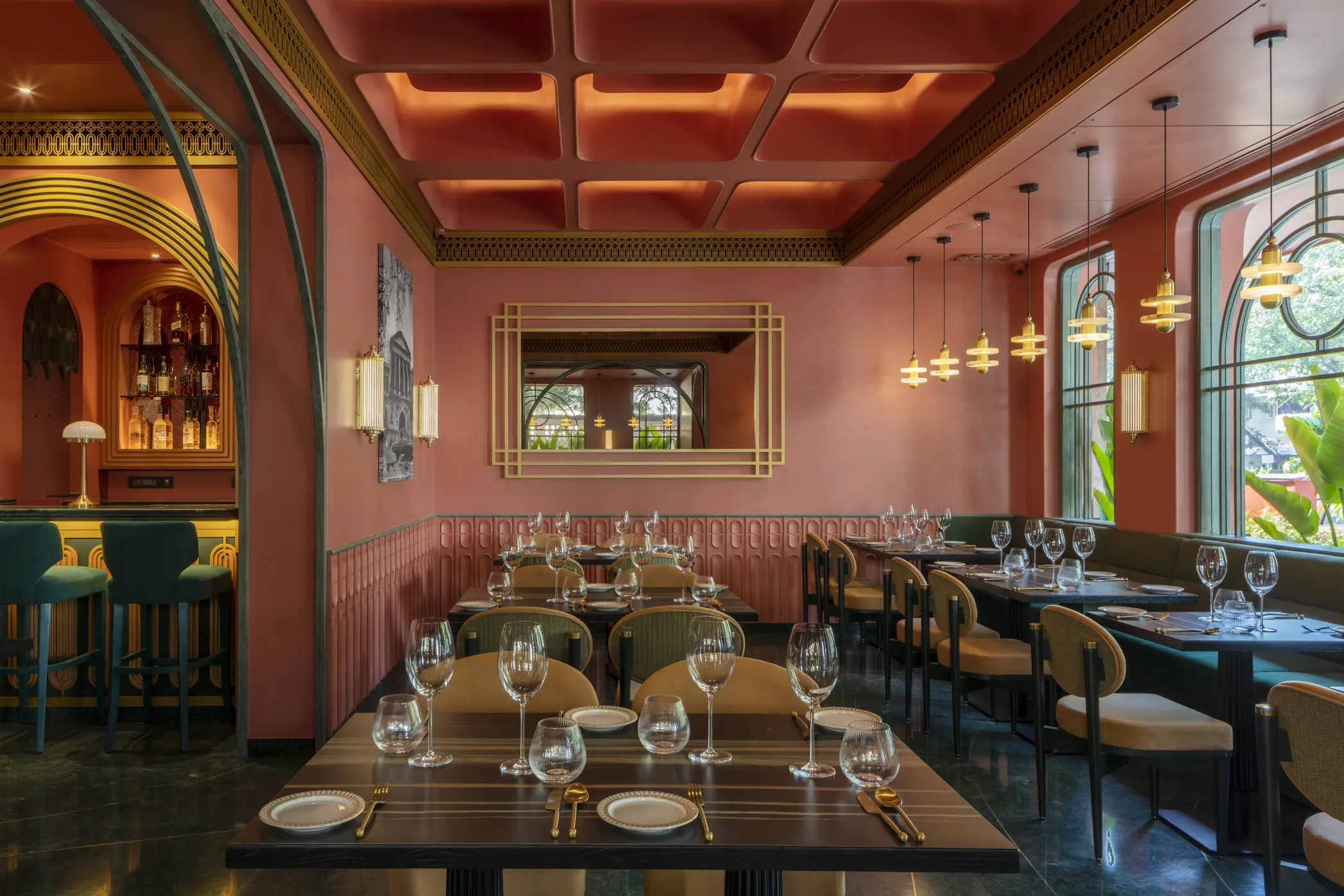
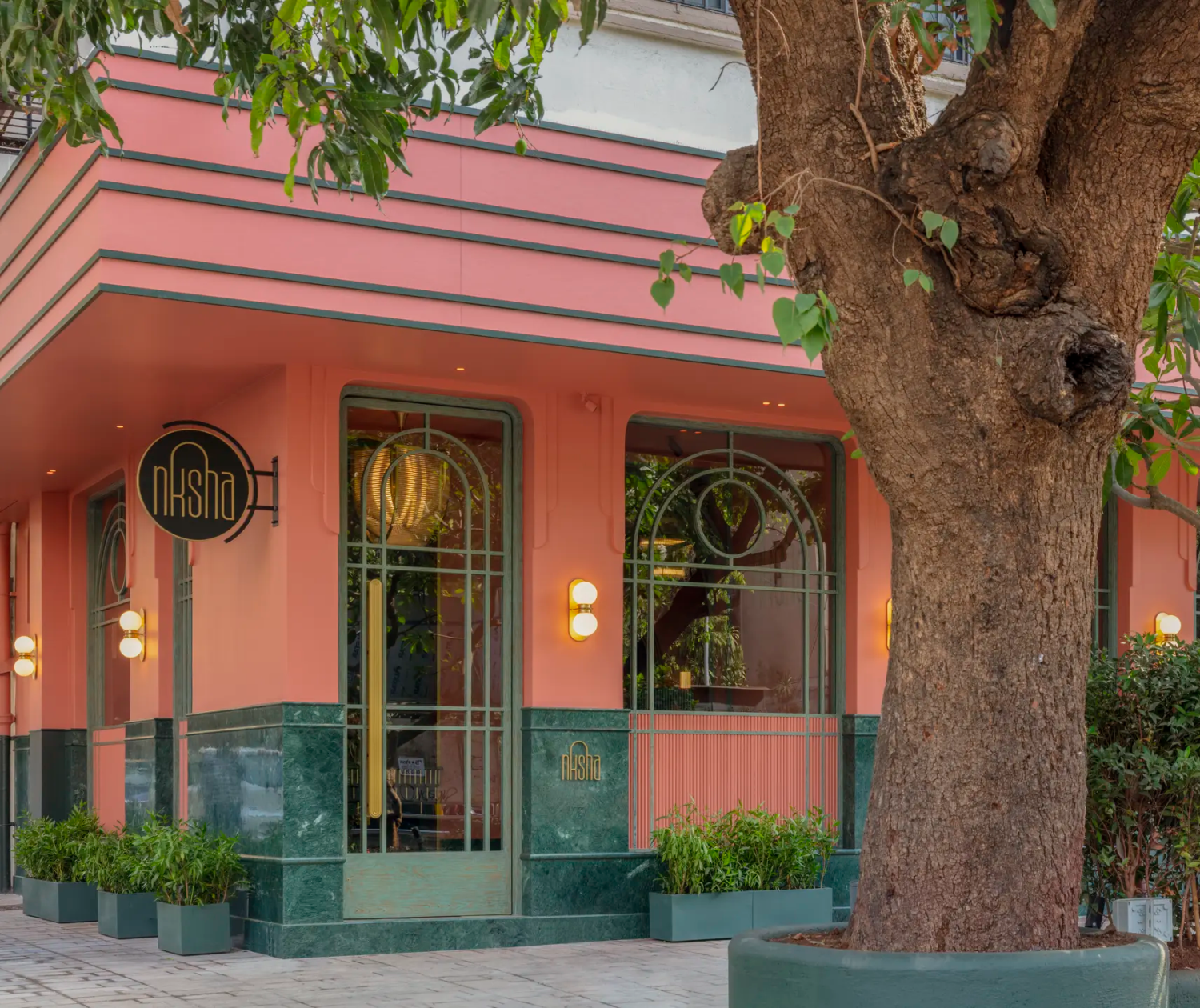



A dinner from the 1930s
Why a nouveau Indian restaurant chose to go Art Deco with interiors
In the heart of South Mumbai, where old structures tell tales of a bygone era, a restaurant serving new Indian cuisine opened in 2023, making headlines as much for its menu as for its interiors. Almost a canvas to showcase the glamorous glory of Art Deco design, the restaurant was envisioned as one that would strike a dialogue between the past and present. “The design choice was not on a whim,” says Shruti Jalan of NS*A Architecture and Interiors, the firm behind Nksha’s interiors.
Nksha is located on Veer Nariman Road, a stretch that was once the epicentre of public dining and entertainment. Home to the best restaurants and live music venues, this road defined socialising for the well heeled of Bombay in the 1930s to the ‘60s. Home to iconic eateries like Gordon & Co. and Parisian Dairy, the road with a history was the perfect choice for Nksha’s owner Pranav M Rungta and Chef Vikram Arora.
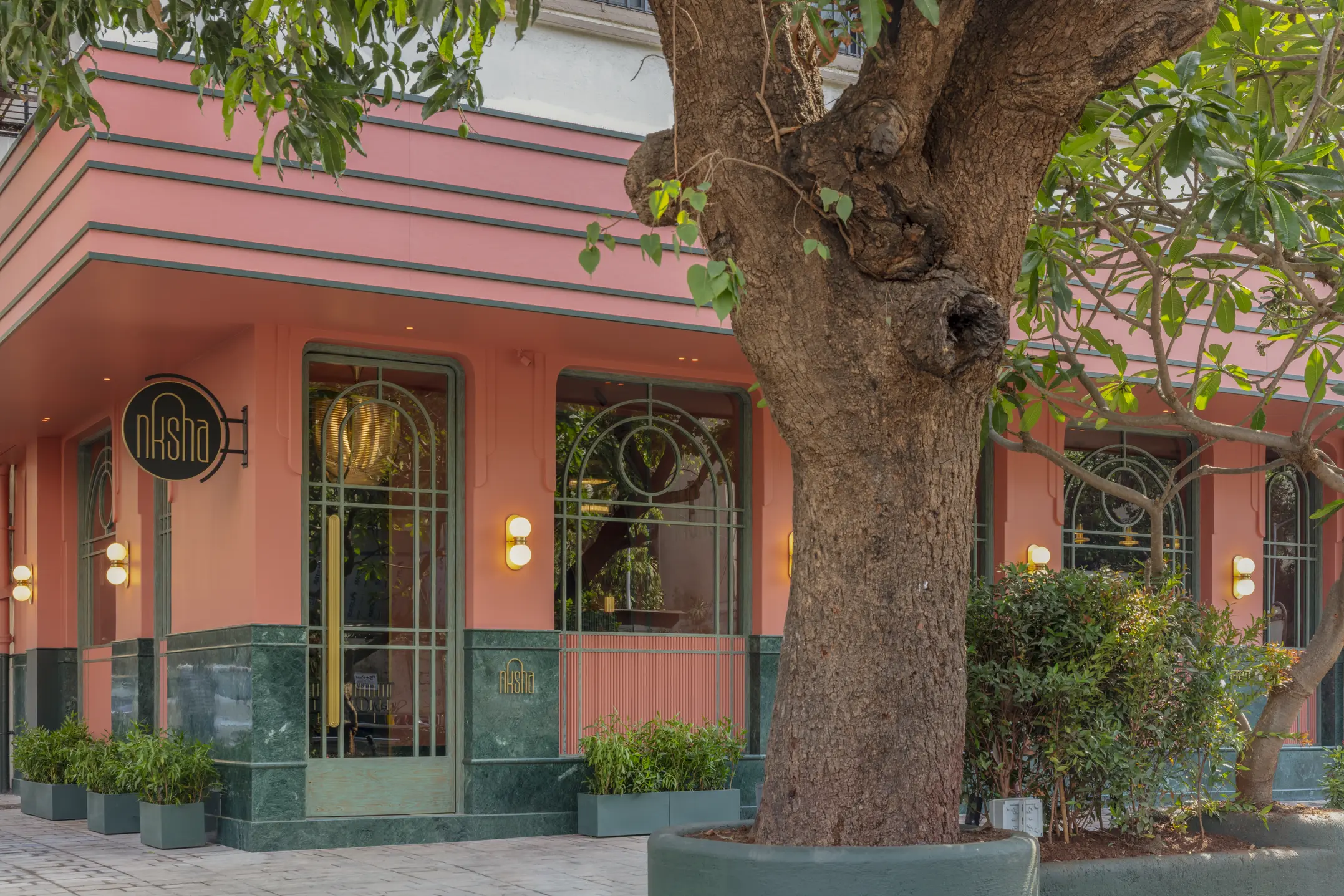
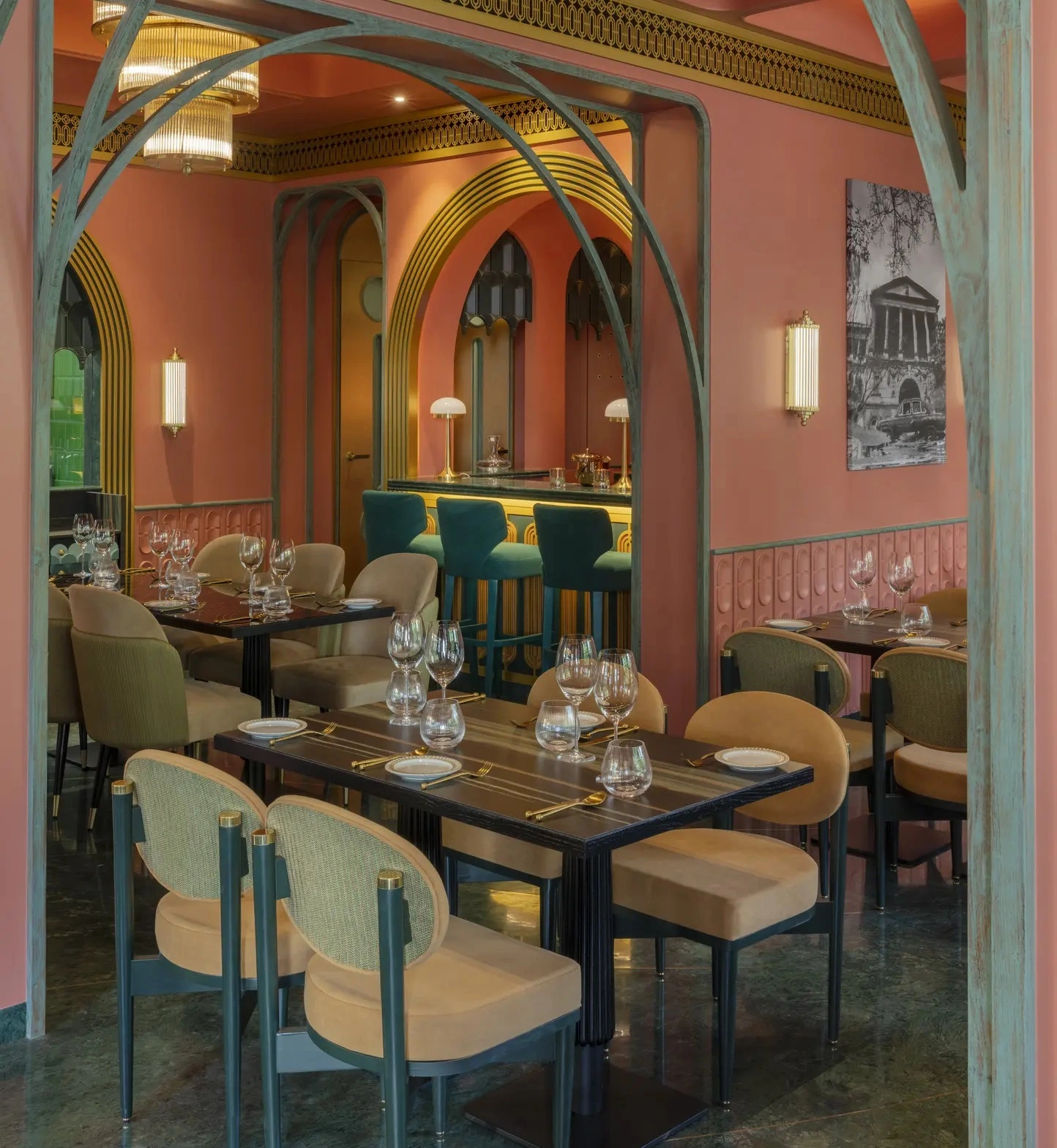
For Jalan and partner Neesha Alwani, this history was impossible to ignore. “This is the older part of Mumbai, still intact, still holding its stories,” Alwani says. Rather than make a forced attempt to be “Indian” in design, the duo chose the Art Deco movement as inspiration to serve as a nod to the city’s pursuit of modern living.
Jalan and Alwani explain the prep for their ideation. “We walked through the heritage neighbourhood, drawing inspiration from its theatres, Deco-style façades, and the modern rhythm reflected in the apartment buildings of Marine Drive and Oval Maidan. For a restaurant rooted in nouveau Indian cuisine, it only felt natural to mirror its culinary fusion with a design language that was equally bold and contemporary,” says Jalan.
Art Deco is synonymous with the glamour of geometric motifs, vibrant shades, hints of gold and a touch of theatricality. But it’s also about lived experiences: cocktail evenings, late nights at the speakeasies, and dinners around cabaret. Nksha was designed with this synergy in mind. Every element of the restaurant’s interiors, from the window grills to the ceiling accents, floor and fixtures, draw from Deco’s stylish drama.
For the design team, the arch was the binding motif. “You’ll see the arch motif in Nksha’s windows, the service counters, even in the panels above the kitchen,” Alwani adds. This repetition was deliberate, ensuring that the Deco language remained coherent. The floor carries the story further, where the same arch softens in the form of a free-flowing wave of a curve etched in bold brass strips.
The architects had initially envisioned muted walls, letting the coral-green floor and gilded accents do the talking. But they abandoned the idea of a restrained palette and took the plunge: coral and green now sweep the walls, ceiling, and façade. The result? A bold, unforgettable exterior that stops passersby in their tracks. It has quickly become the restaurant’s defining feature.